
Thursday, 15Oct 2026
How to Make Technical Training Engaging: 10 Strategies for Better Workplace Learning
Engaging Technical Training Starts with a Simple…
K12, K12 education
Thursday, 9Jan 2025
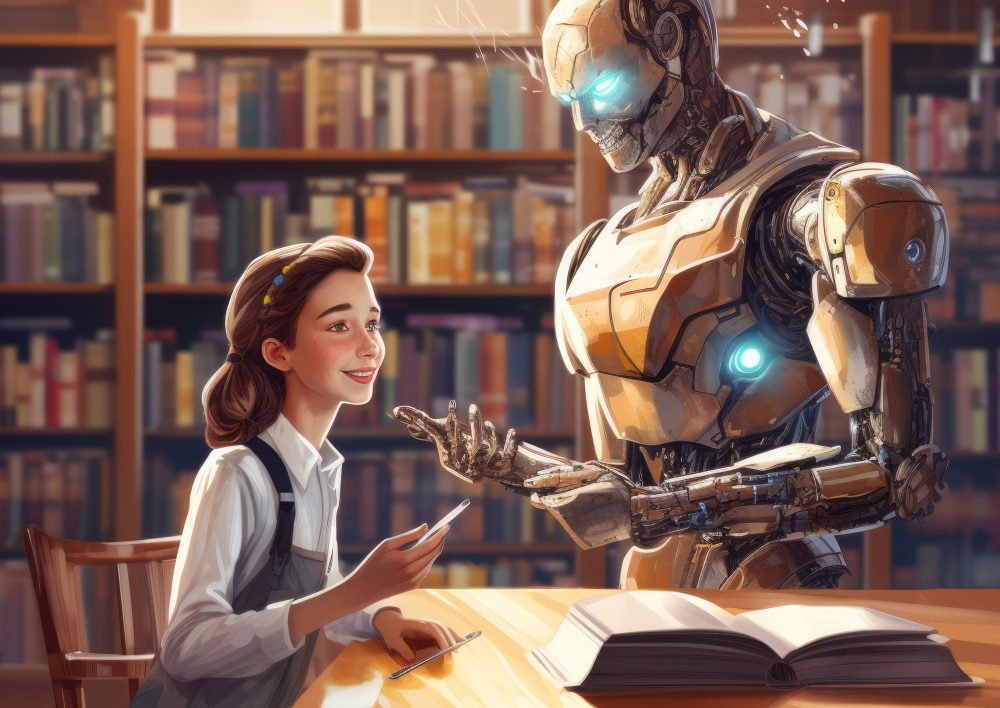
The rapid integration of Artificial Intelligence (AI) in education is revolutionizing how students learn and teachers teach. In India’s K12 sector, AI is not just a trend but a transformative tool that is redefining education. From personalized learning to automating administrative tasks, AI is enabling a more efficient, engaging, and inclusive learning environment. For stakeholders aiming to meet the ever-evolving demands of students and educators, understanding and leveraging AI is crucial.
Artificial Intelligence in education focuses on enhancing the teaching-learning process by automating repetitive tasks, providing personalized learning experiences, and enabling data-driven decisions. In the K12 space, AI-powered tools are becoming indispensable in:
Several factors are driving the adoption of AI in the Indian K12 education system:
With the proliferation of affordable smartphones, high-speed internet, and government-led digital initiatives, schools and students are more connected than ever. AI tools seamlessly integrate into this digital ecosystem.
Indian classrooms often face the challenge of large student-teacher ratios. AI addresses this issue by delivering individualized learning experiences, ensuring that no student is left behind.
AI aligns well with NEP 2020’s emphasis on critical thinking, problem-solving, and skill development, fostering 21st-century competencies among students.
As India aims to position itself as a global knowledge hub, adopting cutting-edge AI technologies in education is vital to prepare students for future challenges.
AI-powered platforms analyze individual learning patterns to create customized lesson plans, ensuring students learn at their own pace.
AI automates administrative tasks such as attendance tracking, grading, and report generation, allowing teachers to focus more on student engagement.
AI tools like speech-to-text, text-to-speech, and real-time translation make education accessible to students with special needs and those from diverse linguistic backgrounds.
By incorporating AI into gamified modules, students can learn complex concepts in a fun and interactive way, boosting retention and interest.
While AI offers numerous benefits, its integration in India’s K12 sector comes with challenges such as:
Learning Owl specializes in creating innovative content solutions that align with AI-powered educational tools. Here’s how we assist institutions and EdTech companies:
AI in education opens new avenues for collaboration between schools, EdTech platforms, and content creators. By working together, stakeholders can:
The integration of Artificial Intelligence in K12 education is not just about adopting a new technology but embracing a paradigm shift that prioritizes personalized, inclusive, and skill-based learning. For schools, EdTech platforms, and content creators, this is an exciting time to innovate and shape the future of education.
Learning Owl is committed to supporting institutions in navigating this transformation. With our expertise in creating AI-compatible educational content, we empower schools and EdTech companies to stay ahead in the ever-evolving education landscape.
Ready to harness the power of AI in your educational initiatives? Partner with Learning Owl today and redefine learning for the next generation.
Thursday, 15Oct 2026
Engaging Technical Training Starts with a Simple…

Monday, 12Oct 2026
Ask most L&D leaders how they handle…

Thursday, 8Oct 2026
The National Education Policy 2020 has been…
Thursday, 15Oct 2026
Engaging Technical Training Starts with a Simple…
Monday, 12Oct 2026
Ask most L&D leaders how they handle…
Thursday, 8Oct 2026
The National Education Policy 2020 has been…
Thursday, 15Oct 2026
Engaging Technical Training Starts with a Simple Shift Engaging technical training begins when employees stop seeing training as information they have to complete and start seeing it as knowledge they…
Read More line_end_arrow_notch
Monday, 12Oct 2026
Ask most L&D leaders how they handle a growing training backlog, and the answer is usually the same: work harder, hire more, or stretch deadlines. Rarely does anyone ask the…
Read More line_end_arrow_notch
Thursday, 8Oct 2026
The National Education Policy 2020 has been analysed extensively. Education researchers have written about its vision. Policy commentators have assessed its ambition. State governments have published implementation roadmaps. EdTech platforms…
Read More line_end_arrow_notch