
Thursday, 15Oct 2026
How to Make Technical Training Engaging: 10 Strategies for Better Workplace Learning
Engaging Technical Training Starts with a Simple…
Tuesday, 10Jan 2023
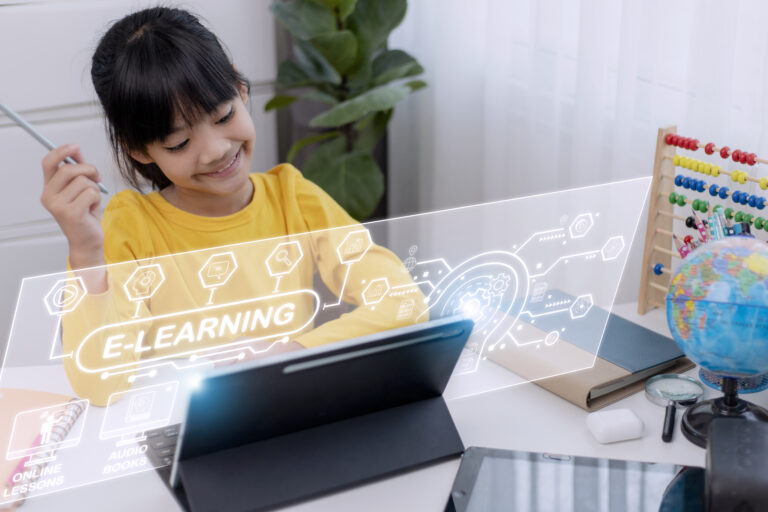
The landscape of education has undergone a revolutionary shift with the development of eLearning in K-12. This technological innovation has redefined the way students learn, teachers instruct, and parents engage in their children’s education.
Education, once confined within classroom walls, now goes beyond the physical boundaries. eLearning in K-12 represents the utilization of electronic technologies to access educational curricula outside the traditional classroom setting. It encompasses a variety of tools and methodologies that facilitate learning through digital platforms, changing the dynamics of education delivery.
One of the foremost advantages of eLearning in K-12 is its ability to provide a flexible and accessible learning environment. Students can tailor their educational experiences to their own pace, learning styles, and schedules. This flexibility eliminates geographical barriers, allowing access to quality education irrespective of location.
Through interactive tools, multimedia resources, and gamification techniques, eLearning makes learning engaging and immersive. Visual aids, simulations, and gamified learning modules enhance student interest and retention, transforming the educational experience into an enjoyable journey of discovery.
eLearning significantly reduces costs for both educational institutions and students. It minimizes the need for physical infrastructure and printed materials, making education more affordable. Additionally, it optimizes resource utilization, allowing scalability without compromising quality.
eLearning caters to diverse learning styles by offering personalized approaches. Visual, auditory, and kinesthetic learners benefit from tailored content and interactive activities, fostering a conducive learning environment for every student.
Data-driven insights in eLearning enable educators to track individual student progress and adapt teaching methods accordingly. Assessments and analytics aid in identifying areas of improvement and customizing learning paths for optimal academic growth.
While technology plays a pivotal role, the importance of teachers in eLearning cannot be overstated. They facilitate learning, provide guidance, and create a supportive environment. Continuous professional development equips educators with the skills necessary to navigate the digital realm effectively.
Studies have shown that eLearning positively impacts student performance, leading to improved academic achievements. Beyond academics, it fosters social and emotional development, nurturing well-rounded individuals.
In the eLearning landscape, parental involvement is crucial. Collaboration between parents, educators, and students enhances the learning experience. Effective communication channels ensure a holistic approach to education.
The future of education lies in further integrating eLearning with traditional methods. Advancements in technology will continue to revolutionize educational paradigms, offering innovative and efficient learning solutions.
To conclude, eLearning in K-12 has emerged as a transformative force in education. Its flexibility, engagement, cost-effectiveness, and adaptability underscore its significance in shaping the future of learning.
Thursday, 15Oct 2026
Engaging Technical Training Starts with a Simple…

Monday, 12Oct 2026
Ask most L&D leaders how they handle…

Thursday, 8Oct 2026
The National Education Policy 2020 has been…
Thursday, 15Oct 2026
Engaging Technical Training Starts with a Simple…
Monday, 12Oct 2026
Ask most L&D leaders how they handle…
Thursday, 8Oct 2026
The National Education Policy 2020 has been…
Thursday, 15Oct 2026
Engaging Technical Training Starts with a Simple Shift Engaging technical training begins when employees stop seeing training as information they have to complete and start seeing it as knowledge they…
Read More line_end_arrow_notch
Monday, 12Oct 2026
Ask most L&D leaders how they handle a growing training backlog, and the answer is usually the same: work harder, hire more, or stretch deadlines. Rarely does anyone ask the…
Read More line_end_arrow_notch
Thursday, 8Oct 2026
The National Education Policy 2020 has been analysed extensively. Education researchers have written about its vision. Policy commentators have assessed its ambition. State governments have published implementation roadmaps. EdTech platforms…
Read More line_end_arrow_notch