
Monday, 16Feb 2026
Digital-first K12 eLearning: Transforming Challenges into Strategic Growth for EdTech Publishers
Digital-first K12 eLearning is no longer just…
Thursday, 11Dec 2025
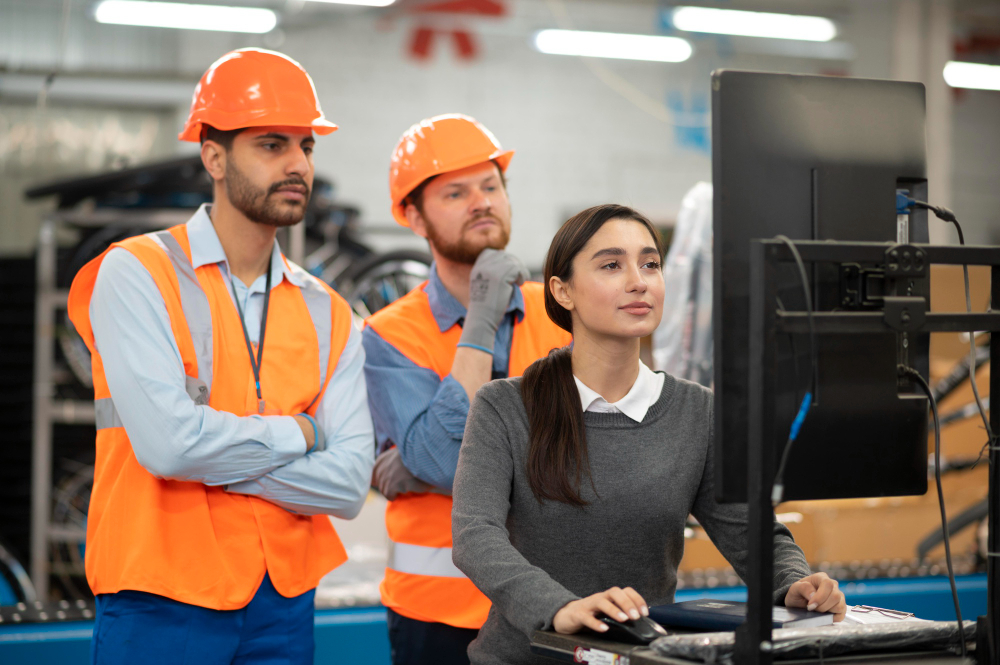
Safety simulation revolutionizes how manufacturing organizations develop their most critical protective asset—employees who recognize hazards, understand procedures, and consistently make safe decisions under pressure. Traditional safety training approaches, classroom lectures, policy reviews and occasional demonstrations—consistently fail to create the emotional impact and practical skill development necessary for lasting behaviour change. Forward-thinking manufacturers now implement comprehensive safety simulation strategies that transform abstract policies into concrete experiences, creating both the knowledge and motivation essential for workplace safety. Organizations using these approaches report reductions in recordable incidents, decreases in lost-time injuries and improvements in near-miss reporting. These aren’t incremental improvements; they represent a fundamental shift in how manufacturing organizations approach safety capability development.
Industrial environments face several critical safety challenges:
These challenges create significant vulnerability when employees face actual safety situations without adequate experiential preparation.
Risk identification skills develop through practice:
Critical safety processes require muscle memory:
These simulation approaches ensure that safety procedures become automatic responses rather than remembered concepts during actual situations.
Emotional impact creates lasting motivation:
A construction company implemented consequence simulation and saw safety procedure compliance increase by 64% compared to their previous policy-focused training.
Many safety scenarios require coordinated response:
These team simulations ensure that safety becomes a collective responsibility with clear coordination patterns during critical situations.
Assembly operations present unique safety challenges:
A automotive manufacturer implemented comprehensive line safety simulation and reduced repetitive motion injuries by 47% while improving production efficiency through better ergonomic practices.
Equipment service involves high-risk activities:
These maintenance-focused simulations ensure that infrequent but high-risk maintenance activities receive adequate practice before actual performance.
Movement operations create specific risks:
A distribution center implemented material handling simulation and reduced their OSHA recordable incidents by 53% within the first year of implementation.
Crisis situations require practiced reactions:
These emergency simulations ensure that rare but critical response procedures receive adequate practice despite their infrequent occurrence in actual operations.
Full immersion creates powerful learning experiences:
A chemical manufacturing facility implemented VR safety training and saw procedure compliance increase by 87% compared to their previous classroom training approach.
On-the-job support enhances safety performance:
These augmented reality approaches extend simulation benefits into actual work environments, providing guidance during real operations.
Accessible technology still creates engagement:
A manufacturing company implemented interactive video simulation and achieved 94% completion rates compared to 47% for their previous safety training.
Engagement increases with challenge elements:
Preventive measures show early effectiveness:
Simulation enables comprehensive assessment:
These capability measures verify that safety simulation is creating actual skill development rather than just awareness.
Ultimate effectiveness appears in incident measures:
These outcome measures demonstrate whether safety simulation is creating tangible workplace safety improvements.
Safety improvements create significant financial benefits:
Simulation often involves unfamiliar technology:
A manufacturing plant implemented these adoption strategies and achieved 97% engagement with their simulation safety program across all employee demographics.
Simulation fidelity affects both effectiveness and expense:
These balancing approaches ensure that simulation investments focus on areas with highest safety impact.
Simulation learning must apply to actual work:
Production environments create time constraints:
These access strategies ensure that all employees receive simulation experiences regardless of shift patterns or production demands.
As technology continues to evolve, several emerging approaches show particular promise:
Touch sensation adds critical safety dimensions:
These haptic elements will create even more realistic safety experiences that develop proper physical technique alongside decision-making skills.
Artificial intelligence is transforming simulation personalization:
These AI capabilities will create increasingly relevant safety simulations that focus on each employee’s specific development needs.
Facility replication enables precise simulation:
A chemical plant implemented early versions of this approach for process safety training and improved procedure compliance by 74% through highly specific simulation.
Biometric data enhances safety readiness assessment:
These monitoring approaches will provide unprecedented visibility into the human factors affecting safety performance beyond observable behaviour.
Comprehensive safety simulation represents more than just modernized training, it offers a fundamental rethinking of how organizations develop the human capabilities essential for workplace safety. By creating emotional impact, building practical skills, and providing consequence-free practice opportunities, simulation transforms safety from a compliance requirement to an operational advantage.
The most successful manufacturing organizations recognize that safety performance directly impacts both human and business outcomes. By implementing strategic safety simulation approaches, these organizations ensure that employees develop both the skills and motivation to make safe decisions consistently, even under the pressure of production demands.
Monday, 16Feb 2026
Digital-first K12 eLearning is no longer just…

Thursday, 12Feb 2026
As we enter 2026, the retail sector…

Monday, 9Feb 2026
Beyond Checkbox Compliance Compliance culture development transforms…
Monday, 16Feb 2026
Digital-first K12 eLearning is no longer just…
Thursday, 12Feb 2026
As we enter 2026, the retail sector…
Monday, 9Feb 2026
Beyond Checkbox Compliance Compliance culture development transforms…
Monday, 16Feb 2026
Digital-first K12 eLearning is no longer just a luxury; it is the cornerstone of survival for publishers aiming to thrive in an increasingly competitive educational landscape. As traditional textbooks transition…
Read More line_end_arrow_notch
Thursday, 12Feb 2026
As we enter 2026, the retail sector finds itself at a crossroads. The industry is defined by an "always-on" omnichannel shopper who expects seamless service across physical and digital storefronts.…
Read More line_end_arrow_notch
Monday, 9Feb 2026
Beyond Checkbox Compliance Compliance culture development transforms how financial institutions approach regulatory requirements, converting what many organizations view as burdensome obligations into strategic operational advantages that enhance both risk management…
Read More line_end_arrow_notch