
Monday, 19Jan 2026
Supply Chain Simulation Training: How Digital Learning Builds End-to-End Decision Capability
Why Traditional Supply Chain Training Fails Modern…
Thursday, 25Dec 2025
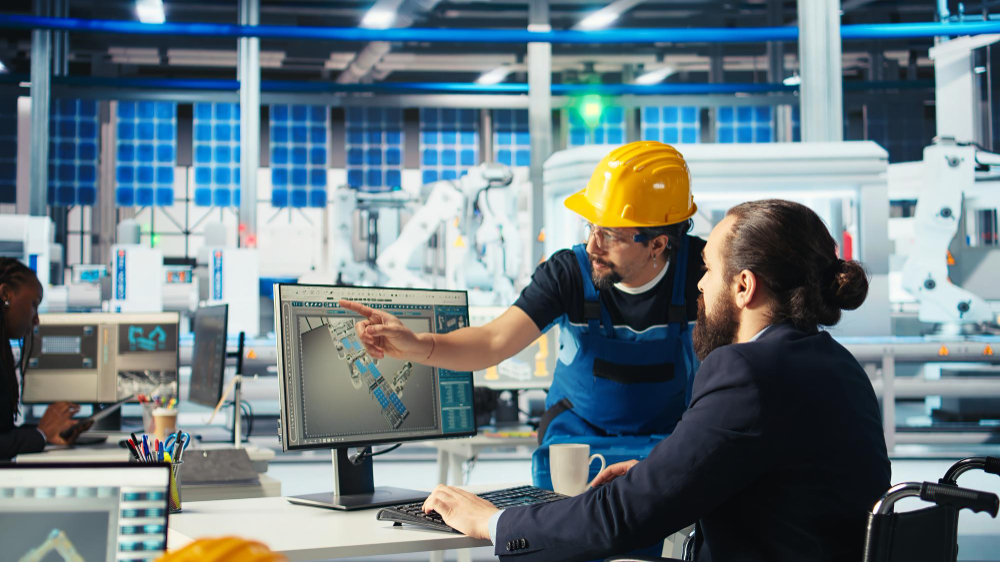
Equipment simulation accelerates how operators develop mastery of complex machinery, creating unprecedented opportunities for practice, visualization, and standardization in technical training environments. Traditional equipment training approaches classroom instruction, limited hands-on time, and shadowing experienced operators consistently fail to provide sufficient practice opportunities while creating significant operational risks during the learning process. Forward-thinking organizations now implement comprehensive equipment simulation strategies that transform abstract procedures into concrete experiences, creating both the knowledge and muscle memory essential for operational excellence. Organizations using these approaches report 40-65% reductions in time-to-competency, 50-75% decreases in training-related equipment damage, and 30-55% improvements in first-time-right operation. These aren’t incremental improvements; they represent a fundamental shift in how technical organizations approach equipment capability development.
Industrial and technical environments face several critical training challenges:
These challenges create significant barriers to effective skill development when organizations rely solely on traditional training approaches.
Critical processes require extensive practice:
A manufacturing plant implemented this approach and reduced operator errors by 47% during the first month of actual equipment operation compared to their previous training approach.
Understanding invisible mechanisms improves troubleshooting:
These visualization approaches ensure that operators understand not just what to do but why procedures matter based on equipment function.
Rare scenarios require prepared responses:
A power generation facility implemented fault simulation and reduced their average fault response time by 64% when operators encountered actual equipment issues.
Service operations benefit from risk-free rehearsal:
These maintenance simulations ensure that technicians develop procedural familiarity before working on actual high-value equipment.
Production environments present specific training needs:
A discrete manufacturing company implemented comprehensive equipment simulation and reduced their new operator training time by 37% while improving first-time-right setup rates by 42%.
Mobile equipment involves unique challenges:
A construction company implemented heavy equipment simulation and reduced their equipment damage during training by 78% while improving operator certification rates.
Healthcare equipment requires precision operation:
A hospital implemented medical device simulation and improved staff confidence ratings by 57% while reducing device-related incident reports by 34%.
Continuous operations present specific challenges:
A chemical processing facility implemented control system simulation and reduced their process upset incidents by 43% during the first year after implementation.
Full immersion creates powerful learning experiences:
An aerospace manufacturer implemented VR equipment training and saw procedure compliance increase by 67% compared to their previous classroom training approach.
On-the-job support enhances performance:
A field service organization implemented AR guidance and reduced their first-time fix failures by 47% while decreasing average service time by 23%.
Accessible technology still creates effective learning:
A manufacturing company implemented screen-based simulation and achieved 94% completion rates compared to 62% for their previous equipment training.
Hybrid approaches combine digital and tangible elements:
A transportation company implemented physical simulators and saw operator errors decrease by 57% during the first month of actual equipment operation.
Accelerated readiness demonstrates training efficiency:
A manufacturing organization measured these factors and found that their simulation-based equipment training reduced time-to-competency by 47% compared to their previous approach.
Improved operation appears in accuracy metrics:
These performance measures verify that equipment simulation is creating actual skill development rather than just knowledge transfer.
Protection of valuable assets demonstrates ROI:
A heavy equipment operator training program demonstrated $1.2 million in annual savings from their simulation-based approach through reduced equipment damage alone.
Long-term effectiveness appears in sustained capability:
A technical training program measured these factors and found that simulation-trained operators maintained 78% higher knowledge retention after six months compared to traditionally trained peers.
Simulation realism affects both effectiveness and availability:
These balancing approaches ensure that simulation investments focus on areas with highest operational impact while maintaining broad accessibility.
Learner diversity creates implementation challenges:
A manufacturing plant implemented these approaches and achieved 97% simulation completion rates across all employee demographics despite significant initial digital skill variation.
Simulation learning must apply to real operation:
An industrial maintenance program implemented these transfer strategies and saw 83% of simulated procedures correctly applied during first attempts on actual equipment.
No simulation perfectly replicates reality:
These transparency approaches ensure that learners understand both the value and limitations of their simulation experiences.
As technology continues to evolve, several emerging approaches show particular promise:
Touch sensation adds critical operational dimensions:
These haptic elements will create even more realistic operational experiences that develop proper physical technique alongside procedural knowledge.
Exact equipment replication enables precise simulation:
Artificial intelligence is transforming simulation personalization:
These AI capabilities will create increasingly relevant equipment simulations that focus on each operator’s specific development needs.
Distributed teams benefit from shared experiences:
Comprehensive equipment simulation represents more than just modernized training it offers a fundamental rethinking of how organizations develop the technical capabilities essential for operational excellence. By creating risk-free practice opportunities, visualizing invisible processes, and standardizing training experiences, simulation transforms equipment operation from a high-risk learning process to a systematic capability development approach.
The most successful technical organizations recognize that equipment performance directly depends on operator capability. By implementing strategic simulation approaches, these organizations ensure that operators develop both the procedural knowledge and practical skills to maximize equipment effectiveness while minimizing operational risks.
Monday, 19Jan 2026
Why Traditional Supply Chain Training Fails Modern…
Thursday, 15Jan 2026
Lean manufacturing transformation depends less on tools…
Monday, 12Jan 2026
For Learning & Development leaders, HR executives,…
Monday, 19Jan 2026
Why Traditional Supply Chain Training Fails Modern…
Thursday, 15Jan 2026
Lean manufacturing transformation depends less on tools…
Monday, 12Jan 2026
For Learning & Development leaders, HR executives,…
Monday, 19Jan 2026
Why Traditional Supply Chain Training Fails Modern Organizations For Learning & Development leaders, supply chain capability development has become a strategic risk not just an operational concern. Despite investments in…
Read More line_end_arrow_notch
Thursday, 15Jan 2026
Lean manufacturing transformation depends less on tools and more on people. Organizations that succeed in lean do not simply deploy value stream maps or kaizen events they build deep, shared…
Read More line_end_arrow_notch
Monday, 12Jan 2026
For Learning & Development leaders, HR executives, universities, and training organizations, the challenge is clear: learners move fluidly between systems, devices, and environments, yet most learning technologies remain fragmented. Disconnected…
Read More line_end_arrow_notch