
Monday, 19Jan 2026
Supply Chain Simulation Training: How Digital Learning Builds End-to-End Decision Capability
Why Traditional Supply Chain Training Fails Modern…
Wednesday, 26Feb 2025
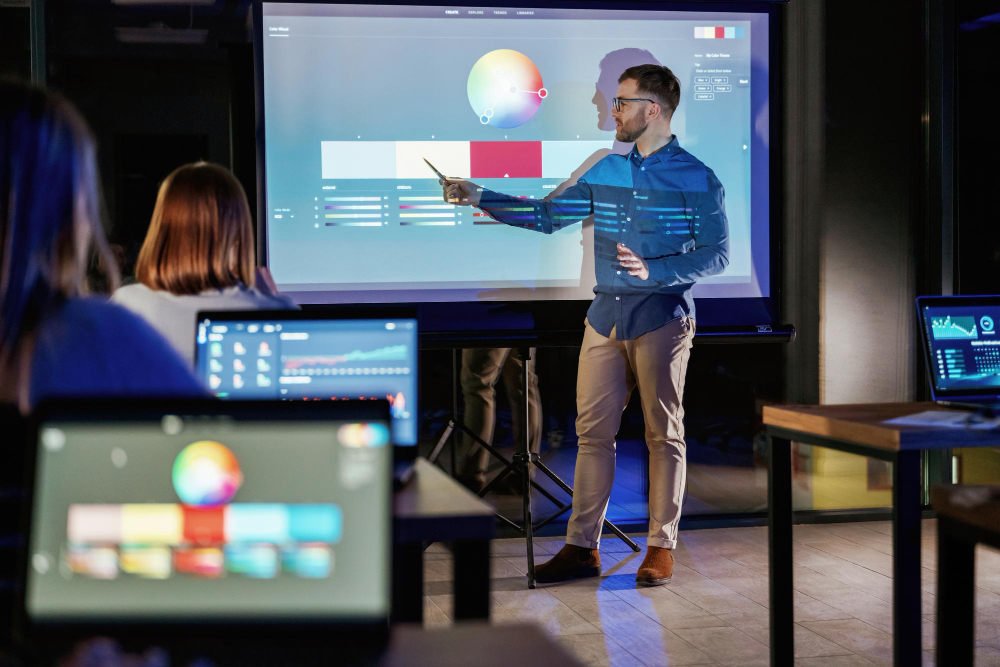
Imagine spending months designing an ILT program—only for it to be outdated, inaccessible, or inconsistent. Now, imagine a seamless digital transformation that turns your ILT into an engaging, interactive, and scalable eLearning experience. That’s the power of ILT to eLearning conversion done right!
Instructor-Led Training (ILT) has been a staple for years, but it comes with challenges—high costs, logistical headaches, and limited accessibility. eLearning offers a flexible, scalable, and cost-effective solution that makes learning available anytime, anywhere. But the transition needs to be done thoughtfully to maintain quality and engagement.
Design content so that learners discover information through interactions—clicking, hovering, or exploring reveals insights.
• Make content interactive with quizzes, simulations, and gamification.
• Use storytelling and real-world scenarios to connect with learners.
• Incorporate videos and animations to make learning more dynamic.
Don’t let outdated ILT hold your learners back. Partner with Learning Owl and transform your ILT into engaging eLearning experiences that are scalable, cost-effective, and future-proof! Ready to make the switch? Let’s get started today! ✨
Monday, 19Jan 2026
Why Traditional Supply Chain Training Fails Modern…

Thursday, 15Jan 2026
Lean manufacturing transformation depends less on tools…
Monday, 12Jan 2026
For Learning & Development leaders, HR executives,…
Monday, 19Jan 2026
Why Traditional Supply Chain Training Fails Modern…
Thursday, 15Jan 2026
Lean manufacturing transformation depends less on tools…
Monday, 12Jan 2026
For Learning & Development leaders, HR executives,…
Monday, 19Jan 2026
Why Traditional Supply Chain Training Fails Modern Organizations For Learning & Development leaders, supply chain capability development has become a strategic risk not just an operational concern. Despite investments in…
Read More line_end_arrow_notch
Thursday, 15Jan 2026
Lean manufacturing transformation depends less on tools and more on people. Organizations that succeed in lean do not simply deploy value stream maps or kaizen events they build deep, shared…
Read More line_end_arrow_notch
Monday, 12Jan 2026
For Learning & Development leaders, HR executives, universities, and training organizations, the challenge is clear: learners move fluidly between systems, devices, and environments, yet most learning technologies remain fragmented. Disconnected…
Read More line_end_arrow_notch