
Thursday, 25Dec 2025
Equipment Simulation Accelerates Operational Mastery: Digital Approaches for Complex Machinery Training
Beyond Passive Instruction Equipment simulation accelerates how…
Monday, 22Dec 2025
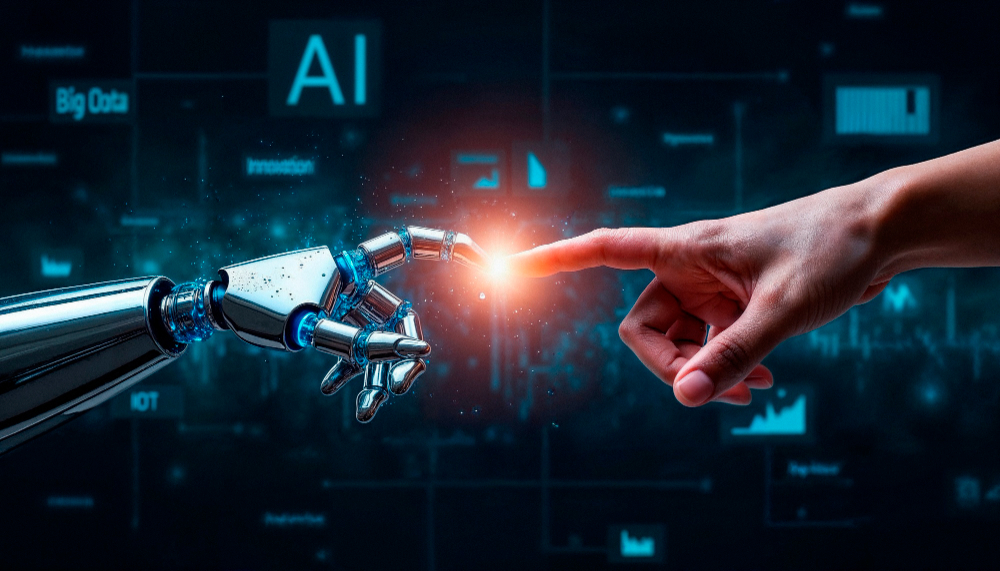
AI implementation clarifies the actual capabilities, limitations, and appropriate applications of artificial intelligence in educational contexts, creating unprecedented opportunities to separate mythology from reality in this rapidly evolving field. Public discourse around AI in education often oscillates between utopian promises of effortless personalization and dystopian fears of teacher replacement—both perspectives missing the nuanced reality of current implementations. Research examining actual AI educational applications demonstrates that well-designed systems can improve learning outcomes by 15-30%, increase engagement by 25-45%, and enhance educator effectiveness by providing 30-50% more time for high-value interactions. These improvements stem not from AI replacing human elements of education but from thoughtful integration that amplifies human capabilities while addressing specific educational challenges.
Educational stakeholders face several critical challenges in understanding AI:
These challenges create significant confusion about what AI actually can and cannot do in educational contexts, often leading to either uncritical adoption or categorical rejection.
How AI personalisation works in real classrooms is more bounded than many expect:
Myth: AI creates fully personalized learning experiences equivalent to human tutors.
Reality: Current AI systems excel at specific types of personalization:
A university implemented AI-enhanced adaptive learning and saw course completion rates improve by 24% through targeted support, while still requiring significant human design and oversight.
What actually changes is not the presence of teachers, but the shape of their role:
Myth: AI will replace educators, making human teachers obsolete.
Reality: Effective AI implementation transforms rather than replaces teaching roles:
A K-12 school district implemented AI-enhanced learning systems and found that teachers reported spending 37% more time on high-value interactions with students rather than being replaced.
When implemented responsibly, AI systems follow deliberate safeguards rather than shortcuts:
Myth: AI educational systems inevitably create privacy nightmares and algorithmic bias.
Reality: Responsible AI implementation includes specific protections:
These ethical approaches ensure that AI serves educational improvement while respecting student data rights and institutional responsibilities.
Behind every effective AI system lies a level of effort that is often underestimated:
Myth: Any institution can easily build sophisticated AI learning systems.
Reality: AI development involves significant requirements:
These development realities explain why most educational institutions implement partner-developed AI rather than creating proprietary systems.
In schools, AI adoption tends to be practical and purpose-driven rather than futuristic:
Myth: AI in K-12 means robot teachers and fully automated classrooms.
Reality: Actual K-12 implementations focus on targeted support:
An elementary school implemented targeted AI reading support and improved student reading growth by 32% compared to traditional approaches while maintaining teacher-led instruction.
Universities apply AI selectively to address scale-related challenges:
Myth: AI in higher education creates fully automated course experiences.
Reality: Effective implementations focus on specific challenges:
A university implemented these targeted approaches and improved course completion rates by 18% while maintaining instructor-led course design and facilitation.
In workplace learning, AI is applied where it directly supports performance:
Myth: AI corporate training creates completely automated employee development.
Reality: Business implementations address specific training challenges:
A technology company implemented AI-enhanced training and reduced time-to-competency by 34% while maintaining human mentorship and specialized instruction.
For diverse learners, AI delivers value when applied with clear intent and boundaries:
Myth: AI provides universal solutions for all learning differences.
Reality: Targeted implementations address specific needs:
A special education program implemented these supports and saw student engagement increase by 47% through more accessible and responsive learning experiences.
Language-based AI excels in specific tasks rather than holistic understanding:
Myth: AI understands language the same way humans do.
Reality: Current NLP systems have particular capabilities:
These capabilities enable valuable educational applications while still requiring human oversight for nuanced understanding and context.
Personalisation emerges from defined technical rules, not intuition:
Myth: AI intuitively understands each learner’s needs like a human tutor.
Reality: Adaptation relies on specific technical approaches:
A mathematics program implemented these mechanisms and improved concept mastery by 27% compared to non-adaptive approaches, while still requiring expert design of the knowledge structure.
AI-generated content is most effective when used as an assistive layer:
Myth: AI creates perfect original educational content autonomously.
Reality: Generation has specific capabilities and limitations:
These realities explain why effective educational implementations use AI-generated content as a starting point for human refinement rather than as a complete solution.
Evaluation strength depends heavily on the type of learning evidence involved:
Myth: AI can perfectly evaluate all types of student learning.
Reality: Assessment capabilities vary by response type:
A university implemented AI assessment assistance and reduced grading time by 43% for objective components while maintaining human evaluation of complex creative work.
In practice, connecting AI with existing platforms is rarely seamless:
Myth: AI systems easily plug into any educational technology ecosystem.
Reality: Integration requires specific considerations:
These integration realities explain why phased implementation with careful planning typically succeeds while rapid, comprehensive deployment often fails.
Successful adoption depends as much on educator readiness as on technology:
Myth: Teachers intuitively understand how to use AI educational tools.
Reality: Effective implementation requires specific support:
A school district implemented comprehensive teacher preparation and saw AI tool utilization increase from 23% to 87% among participating educators.
The financial impact of AI unfolds over time rather than instantly:
Myth: AI educational systems either save money immediately or are too expensive to consider.
Reality: ROI involves nuanced factors:
A college conducted comprehensive ROI analysis and found their AI implementation produced 3.2x return over three years through improved retention and completion, despite significant initial investment.
Meaningful results emerge through phased adoption, not immediate transformation:
Myth: AI educational systems create immediate transformation upon installation.
Reality: Implementation follows predictable phases:
A university implemented these phased approaches and achieved 78% higher satisfaction with their AI implementation compared to a peer institution that attempted comprehensive immediate deployment.
As technology continues to evolve, several emerging approaches show particular promise while requiring realistic expectations:
Emerging capabilities expand insight, but not without ethical and practical limits:
Myth: AI will soon perfectly understand all aspects of student learning through comprehensive monitoring.
Reality: Multimodal analysis shows specific development patterns:
These multimodal approaches will provide richer understanding of learning processes while still requiring careful ethical implementation and human interpretation.
Looking ahead, generative AI’s value lies in amplification rather than independence:
Myth: Generative AI will soon create perfect, complete curriculum autonomously.
Reality: Educational generation shows specific patterns:
These generative capabilities will increasingly assist educators in content development while maintaining the need for human expertise and judgment.
The strongest models emphasise partnership over substitution:
Myth: Education will soon be divided between AI-taught and human-taught experiences.
Reality: Collaboration models show increasing sophistication:
These collaborative approaches will increasingly leverage the complementary strengths of both AI systems and human educators rather than creating an either/or implementation reality.
As AI adoption scales, ethical maturity becomes an ongoing process rather than a fixed destination:
Myth: Educational AI ethics are either completely solved or fundamentally unsolvable.
Reality: Ethical approaches show specific evolution:
These ethical developments will create increasingly responsible implementation approaches that address legitimate concerns while enabling appropriate educational benefits.
Clear understanding of AI implementation realities represents more than just technical accuracy—it offers a fundamental opportunity to move beyond both hype and fear toward thoughtful integration that serves genuine educational needs. By distinguishing between exaggerated claims and actual capabilities, educational stakeholders can make informed decisions that leverage AI’s real strengths while maintaining the irreplaceable human elements of effective learning.
The most successful educational institutions recognize that AI represents neither educational salvation nor destruction but rather a powerful set of tools that—when thoughtfully implemented—can address specific challenges while enhancing human teaching and learning. By implementing AI with clear understanding of its actual capabilities and limitations, these institutions create balanced approaches that improve outcomes while maintaining educational integrity.
Learning Owl specializes in developing comprehensive AI educational solutions based on realistic capabilities rather than exaggerated claims. Our team combines deep learning science expertise with cutting-edge AI understanding to create implementations that address specific educational challenges while complementing rather than replacing human elements.
Contact Learning Owl today to discover how our balanced AI implementation approach can transform your educational technology strategy with solutions based on reality rather than mythology.
Thursday, 25Dec 2025
Beyond Passive Instruction Equipment simulation accelerates how…
Monday, 22Dec 2025
Beyond Hype and Fear AI implementation clarifies…

Thursday, 18Dec 2025
Beyond Basic Tool Operation Digital fluency programs…
Thursday, 25Dec 2025
Beyond Passive Instruction Equipment simulation accelerates how…
Monday, 22Dec 2025
Beyond Hype and Fear AI implementation clarifies…
Thursday, 18Dec 2025
Beyond Basic Tool Operation Digital fluency programs…
Thursday, 25Dec 2025
Beyond Passive Instruction Equipment simulation accelerates how operators develop mastery of complex machinery, creating unprecedented opportunities for practice, visualization, and standardization in technical training environments. Traditional equipment training approaches classroom…
Read More line_end_arrow_notch
Monday, 22Dec 2025
Beyond Hype and Fear AI implementation clarifies the actual capabilities, limitations, and appropriate applications of artificial intelligence in educational contexts, creating unprecedented opportunities to separate mythology from reality in this…
Read More line_end_arrow_notch
Thursday, 18Dec 2025
Beyond Basic Tool Operation Digital fluency programs prepare students for unprecedented technological change, creating the adaptable capabilities essential for success in rapidly evolving work environments. Traditional digital literacy approaches, focused…
Read More line_end_arrow_notch