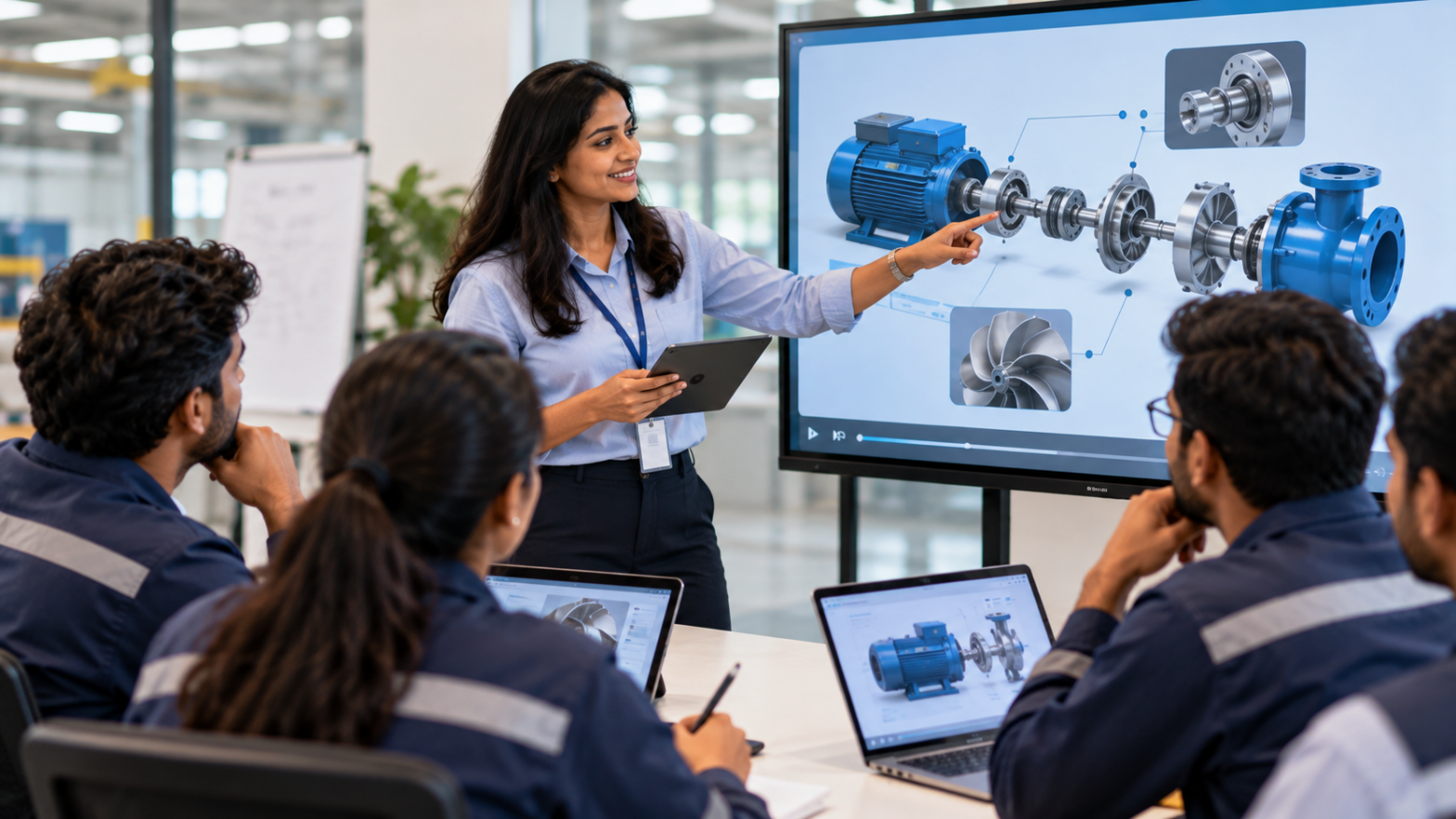
Safety Simulation Revolutionizes Manufacturing Training: Digital Approaches for Injury Prevention

Safety Simulation Revolutionizes Manufacturing Training: Digital Approaches for Injury Prevention

Thursday, 11Dec 2025

Safety Simulation Revolutionizes Manufacturing Training: Digital Approaches for Injury Prevention

Spread the love

Beyond Compliance Checklists

Safety simulation revolutionizes how manufacturing organizations develop their most critical protective asset—employees who recognize hazards, understand procedures, and consistently make safe decisions under pressure. Traditional safety training approaches, classroom lectures, policy reviews and occasional demonstrations—consistently fail to create the emotional impact and practical skill development necessary for lasting behaviour change. Forward-thinking manufacturers now implement comprehensive safety simulation strategies that transform abstract policies into concrete experiences, creating both the knowledge and motivation essential for workplace safety. Organizations using these approaches report reductions in recordable incidents, decreases in lost-time injuries and improvements in near-miss reporting. These aren’t incremental improvements; they represent a fundamental shift in how manufacturing organizations approach safety capability development.

The Manufacturing Safety Challenge

Industrial environments face several critical safety challenges:

  • High-consequence risks requiring perfect execution
  • Complex procedures difficult to practice safely
  • Infrequent emergency scenarios with limited preparation opportunity
  • Diverse workforce with varying language and literacy levels
  • Complacency development through routine operations
  • Limited attention during traditional safety training

These challenges create significant vulnerability when employees face actual safety situations without adequate experiential preparation.

Core Safety Simulation Strategies for Maximum Impact

Hazard Recognition Simulation

Risk identification skills develop through practice:

  • Interactive environment exploration for hazard spotting
  • Progressive difficulty with increasingly subtle risks
  • Comparative scenarios showing correct vs. incorrect conditions
  • Explanation requirements for identified hazards
  • Scoring systems for motivation and measurement
Procedure Practice Simulation

Critical safety processes require muscle memory:

  • Step-by-step guidance with proper sequence emphasis
  • Common error consequence demonstration
  • Decision point practice with realistic pressure
  • Equipment operation in virtual environments
  • Emergency response procedure rehearsal

These simulation approaches ensure that safety procedures become automatic responses rather than remembered concepts during actual situations.

Consequence Demonstration Simulation

Emotional impact creates lasting motivation:

  • Realistic injury visualization from unsafe actions
  • Personal impact scenarios beyond workplace effects
  • Near-miss development into incident progression
  • Long-term consequence illustration over time
  • Testimonial integration from actual incidents

A construction company implemented consequence simulation and saw safety procedure compliance increase by 64% compared to their previous policy-focused training.

Team Coordination Simulation

Many safety scenarios require coordinated response:

  • Role-specific responsibility practice
  • Communication protocol rehearsal
  • Handoff procedure practice between team members
  • Mutual monitoring and speaking-up behavior development
  • Shared mental model building for emergency response

These team simulations ensure that safety becomes a collective responsibility with clear coordination patterns during critical situations.

Implementation Strategies Across Manufacturing Contexts

Production Line Safety Simulation

Assembly operations present unique safety challenges:

  • Machine guarding procedure practice
  • Lockout/tagout simulation with consequence
  • Ergonomic risk identification and mitigation
  • Material handling safety technique practice
  • Production pressure safety decision scenarios

A automotive manufacturer implemented comprehensive line safety simulation and reduced repetitive motion injuries by 47% while improving production efficiency through better ergonomic practices.

Maintenance Safety Preparation

Equipment service involves high-risk activities:

  • Confined space entry procedure simulation
  • Electrical safety practice with consequence
  • Fall protection system utilization training
  • Chemical exposure prevention technique practice
  • Tool and equipment safety simulation

These maintenance-focused simulations ensure that infrequent but high-risk maintenance activities receive adequate practice before actual performance.

Material Handling Safety Development

Movement operations create specific risks:

  • Forklift operation simulation in various environments
  • Loading dock safety procedure practice
  • Manual lifting technique development
  • Hazardous material handling simulation
  • Traffic pattern adherence in shared spaces

A distribution center implemented material handling simulation and reduced their OSHA recordable incidents by 53% within the first year of implementation.

Emergency Response Preparation

Crisis situations require practiced reactions:

  • Fire response procedure simulation
  • Chemical spill containment practice
  • Evacuation coordination rehearsal
  • First aid application in realistic scenarios
  • Severe weather response simulation

These emergency simulations ensure that rare but critical response procedures receive adequate practice despite their infrequent occurrence in actual operations.

Simulation Modalities for Manufacturing Safety

Virtual Reality Safety Immersion

Full immersion creates powerful learning experiences:

  • 360° environment awareness development
  • Realistic equipment interaction through controllers
  • Spatial hazard identification practice
  • Procedure execution with physical movement
  • High-consequence scenario exposure without risk

A chemical manufacturing facility implemented VR safety training and saw procedure compliance increase by 87% compared to their previous classroom training approach.

Augmented Reality Guidance

On-the-job support enhances safety performance:

  • Procedure overlay on actual equipment
  • Hazard highlighting in real environments
  • Step verification through computer vision
  • Just-in-time reference for complex tasks
  • Remote expert guidance for unusual situations

These augmented reality approaches extend simulation benefits into actual work environments, providing guidance during real operations.

Interactive Video Simulation

Accessible technology still creates engagement:

  • Decision-point branching scenarios
  • Consequence demonstration based on choices
  • Expert explanation of correct approaches
  • Multiple perspective viewing of incidents
  • Realistic workplace scenario filming

A manufacturing company implemented interactive video simulation and achieved 94% completion rates compared to 47% for their previous safety training.

Game-Based Safety Learning

Engagement increases with challenge elements:

  • Hazard identification competitions
  • Procedure execution with scoring
  • Team-based safety challenge scenarios
  • Leaderboards for safety knowledge demonstration
  • Badge systems for safety expertise areas

Measuring Safety Simulation Effectiveness

Leading Indicator Improvement

Preventive measures show early effectiveness:

  • Hazard reporting frequency increases
  • Near-miss documentation improvement
  • Safety suggestion quality enhancement
  • Procedure compliance rate increases
  • Safety meeting participation and quality
Knowledge and Skill Verification

Simulation enables comprehensive assessment:

  • Hazard recognition accuracy measurement
  • Procedure execution correctness verification
  • Decision quality in simulated scenarios
  • Response time improvement tracking
  • Knowledge retention over extended periods

These capability measures verify that safety simulation is creating actual skill development rather than just awareness.

Lagging Indicator Reduction

Ultimate effectiveness appears in incident measures:

  • Recordable incident reduction
  • Lost time injury frequency decrease
  • First aid case minimization
  • Property damage incident reduction
  • Severity rate improvement

These outcome measures demonstrate whether safety simulation is creating tangible workplace safety improvements.

Return on Investment Calculation

Safety improvements create significant financial benefits:

  • Direct cost reduction from fewer incidents
  • Insurance premium impact analysis
  • Productivity improvement through better processes
  • Regulatory compliance cost reduction
  • Worker compensation claim decrease

Overcoming Common Implementation Challenges

Technology Adoption Barriers

Simulation often involves unfamiliar technology:

  • Progressive introduction starting with simple applications
  • Peer champion identification and support
  • Initial success experiences to build confidence
  • Alternative options for technology-resistant learners
  • Clear value demonstration for participation

A manufacturing plant implemented these adoption strategies and achieved 97% engagement with their simulation safety program across all employee demographics.

Realism vs. Cost Balance

Simulation fidelity affects both effectiveness and expense:

  • Strategic high-fidelity investment for critical risks
  • Lower-fidelity approaches for awareness-level content
  • Mixed-modality programs leveraging different approaches
  • Continuous improvement through feedback and results
  • Prioritization based on risk severity and frequency

These balancing approaches ensure that simulation investments focus on areas with highest safety impact.

Transfer to Workplace Challenge

Simulation learning must apply to actual work:

  • Physical environment similarity in simulations
  • Deliberate connection to actual procedures
  • On-the-job application activities after simulation
  • Supervisor reinforcement of simulated learning
  • Performance support tools bridging simulation to application
Scheduling and Access Logistics

Production environments create time constraints:

  • Mobile simulation options for flexibility
  • Micro-simulation modules fitting short timeframes
  • Shift-appropriate scheduling for access
  • Multiple station availability for concurrent use
  • Self-directed options for individual timing

These access strategies ensure that all employees receive simulation experiences regardless of shift patterns or production demands.

The Future of Manufacturing Safety Simulation

As technology continues to evolve, several emerging approaches show particular promise:

Haptic Feedback Enhancement

Touch sensation adds critical safety dimensions:

  • Resistance simulation for proper technique
  • Vibration feedback for warning conditions
  • Temperature sensation for hazard awareness
  • Force requirement realism for tool operation
  • Texture differentiation for material handling

These haptic elements will create even more realistic safety experiences that develop proper physical technique alongside decision-making skills.

AI-Driven Scenario Adaptation

Artificial intelligence is transforming simulation personalization:

  • Risk profile customization based on job role
  • Difficulty adjustment based on performance
  • Personalized challenge targeting identified weaknesses
  • Scenario generation from actual incident data
  • Continuous improvement through learning patterns

These AI capabilities will create increasingly relevant safety simulations that focus on each employee’s specific development needs.

Digital Twin Safety Integration

Facility replication enables precise simulation:

  • Exact equipment replication for specific training
  • Actual facility layout for navigation practice
  • Real-time condition data integration
  • Procedure practice on digital versions of actual equipment
  • Modification testing for safety improvement

A chemical plant implemented early versions of this approach for process safety training and improved procedure compliance by 74% through highly specific simulation.

Physiological Response Monitoring

Biometric data enhances safety readiness assessment:

  • Stress response measurement during scenarios
  • Attention focus tracking in hazardous situations
  • Decision speed monitoring under pressure
  • Fatigue impact assessment on safety performance
  • Cognitive load measurement during complex procedures

These monitoring approaches will provide unprecedented visibility into the human factors affecting safety performance beyond observable behaviour.

Conclusion: Safety Simulation as Strategic Investment

Comprehensive safety simulation represents more than just modernized training, it offers a fundamental rethinking of how organizations develop the human capabilities essential for workplace safety. By creating emotional impact, building practical skills, and providing consequence-free practice opportunities, simulation transforms safety from a compliance requirement to an operational advantage.

The most successful manufacturing organizations recognize that safety performance directly impacts both human and business outcomes. By implementing strategic safety simulation approaches, these organizations ensure that employees develop both the skills and motivation to make safe decisions consistently, even under the pressure of production demands.

Blog Recommendation

See More
Digital-first K12 eLearning: Transforming Challenges into Strategic Growth for EdTech Publishers

Monday, 16Feb 2026

Digital-first K12 eLearning: Transforming Challenges into Strategic Growth for EdTech Publishers

Digital-first K12 eLearning is no longer just a luxury; it is the cornerstone of survival for publishers aiming to thrive in an increasingly competitive educational landscape. As traditional textbooks transition…

Read More line_end_arrow_notch
Empowering the 2026 Retail Frontline: A Strategic Guide to Micro-learning with Just-In-Time strategy

Thursday, 12Feb 2026

Empowering the 2026 Retail Frontline: A Strategic Guide to Micro-learning with Just-In-Time strategy

As we enter 2026, the retail sector finds itself at a crossroads. The industry is defined by an "always-on" omnichannel shopper who expects seamless service across physical and digital storefronts.…

Read More line_end_arrow_notch
Compliance Culture Development Transforms Banking Operations: Digital Approaches for Regulatory Excellence

Monday, 9Feb 2026

Compliance Culture Development Transforms Banking Operations: Digital Approaches for Regulatory Excellence

Beyond Checkbox Compliance Compliance culture development transforms how financial institutions approach regulatory requirements, converting what many organizations view as burdensome obligations into strategic operational advantages that enhance both risk management…

Read More line_end_arrow_notch